
Even in very “normal” families, family members sometimes do not treat each other well. You might not notice this from the outside, because everything may look fine. Here we describe some subtle forms of violence.
Whether now or back then...
Here we write about parents. You may also recognize this kind of behavior from other important caregivers.
When you look at your family, you may think, “Everything is fine” or “I have a completely normal family.” It is very possible that your family is completely normal. But very unpleasant things can happen in completely normal families. It is also very possible that your parents themselves are not aware that their behavior is harming you, and that you may suffer from it for decades. Their behavior can have harmful effects on your self-esteem and on how you behave in relationships — or toward your own children.
We would like to show you some behavior patterns that are not okay. Put yourself in the following situations and see whether anything feels familiar from your own family. If you are an adult and no longer live with your parents, imagine your past as their child. This is not about portraying parents as villains. It is about having more compassion for yourself as a child. That is important so you can build a good relationship with yourself.
We are not writing here about obvious physical or sexual violence. If you are experiencing this in your family, or if you have experienced it, please read this text. But in families where physical or sexual violence happens, you will probably also recognize one or another of the situations or behaviors described in this text.
There is no room for your needs
Your mother is having a bad day, so she cancels your long-awaited trip because she just can't deal with it. You are very disappointed. If this happens once, it's not a problem. Your mother simply couldn't manage it that time. But imagine your mother does this often: she basically keeps putting her own needs above yours. How you are doing and what you want are generally dismissed. Other people's needs are more important. You learn that there is no room for your needs.
You are pushed into a role
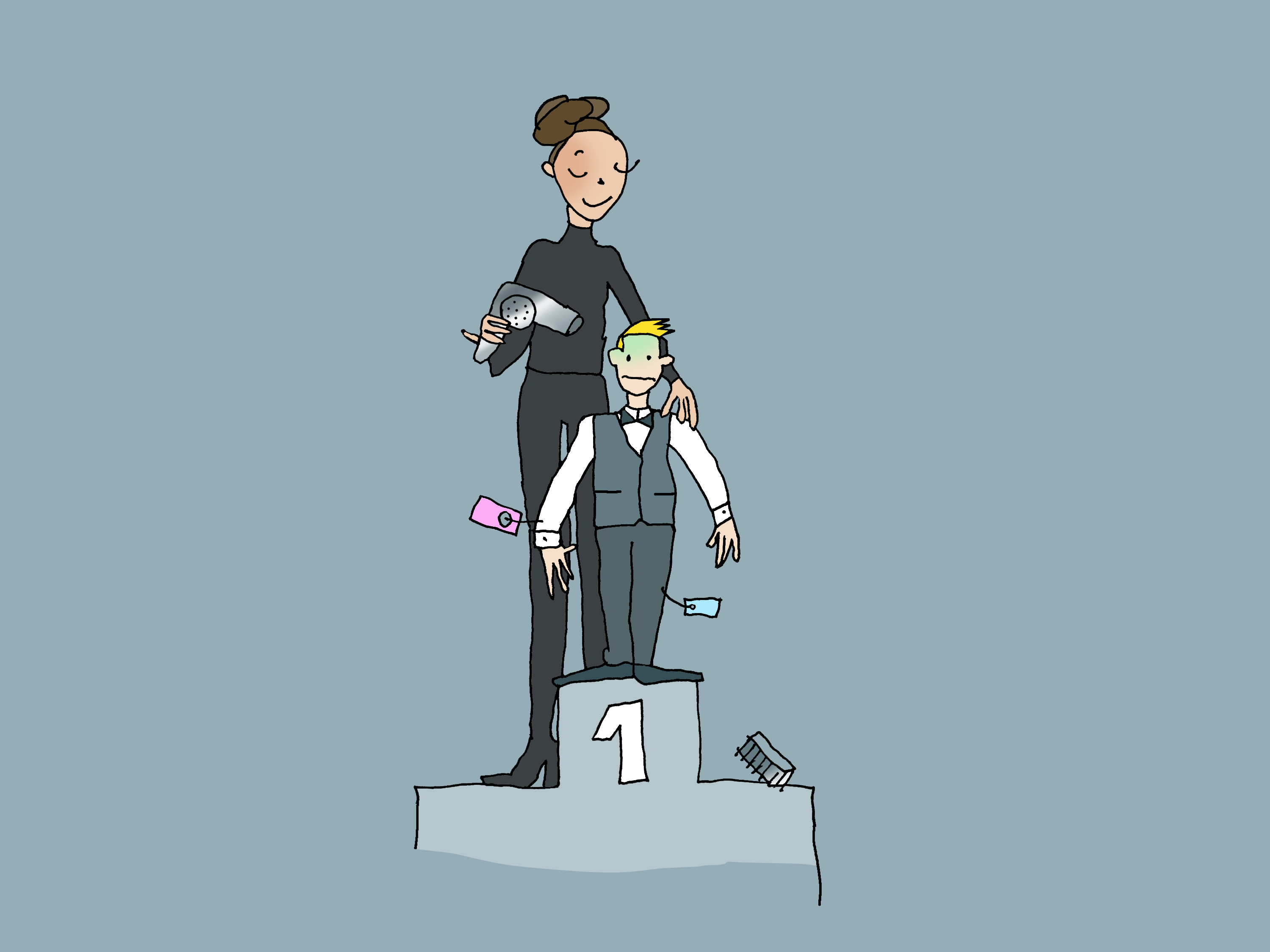
Are you truly important to your parents as a person? Or do they want you to fit a certain image? For example, the successful daughter or the good son? If you fit this image, your parents can bask in it and feel better about themselves. You yourself may end up with a completely inflated self-image and then have trouble coping with life.
Or you may feel that your parents’ image of you does not match reality. You get stressed because you don’t live up to the ideal. You start putting yourself down because of it.
You may also be pushed into a role in the family that does not feel good: the clumsy one, the problem child, the dumb one, and so on. The rest of the family then looks down on you with more or less obvious contempt. This makes them feel better about themselves. And you start putting yourself down.
You are put in a parent’s role
Your mother is going through a longer crisis. Her partner has left her. You are her sunshine, her comfort. As in the section above, you are pushed into a role here too. But this goes further: you have to take care of your mother. In a way, you take on a parental role. You are being used for a purpose.
This is also called parentification: One parent or both parents give the child a parental role and the tasks that come with it. This role is not appropriate for a child. Most of all, it is overwhelming. You may have to take on this kind of role for your entire childhood. That is bad. Because as a child, you simply cannot take on this role. You cannot live up to it. You feel: “I am not enough.”
You are spoiled
When parents spoil their child, they take anything unpleasant away from them and fulfill their wishes right away. A dream childhood? No. Because the problems start quickly — as soon as a spoiled child comes into contact with the “real” world. For example, in kindergarten. When they are expected to do things themselves, or when they learn that they don’t get everything they want. A spoiled child has not had the chance to learn how to tolerate and manage difficult situations. This is actually very bad for self-worth.
Some parents spoil their children because they want peace and quiet. They don’t take the time or energy to set boundaries for their children and work through the conflicts that follow. So spoiling can also be seen as a form of neglect.
You are being manipulated
Suppose you want to go on vacation with a family you are friends with. Your mother looks at you sadly and says, “I hope you have a nice vacation. We’ll manage without you.” You know that look and that suffering tone of voice. You feel that you are abandoning her. You feel guilty. You have a sleepless night. The next morning, you cancel with the family you were going to travel with. Through manipulation, your mother has managed to make sure you don’t “leave” her during the vacation.
Manipulation looks like this: We want something from another person. We know or suspect that the person will not simply give it to us. So we do not ask for it openly. Instead, we try to reach our goal in a hidden, indirect way. Often we do this by provoking unpleasant feelings in the other person. Manipulation is a human ability. We can all do it — and we do it much more often than we think.
Unpleasant feelings are stirred up
Even before we can think clearly, we can feel. Fear and shame, for example. Fear and shame are two very unpleasant emotions that we usually want to avoid. When you are yelled at as a child, you get scared. When you are humiliated, you feel shame. You want to avoid these feelings in the future, so you try to behave in a way that keeps these feelings from being triggered in you again.
Imagine your parents take advantage of this. They stir up unpleasant emotions to control you. Or maybe they act out their own emotions in front of you without any self-control. You get infected by their unpleasant feelings, or they scare you. What you actually need is the opposite: When you experience unpleasant feelings, you should be comforted.
Your feelings are dismissed instead of comforted
Maybe you know phrases like “Don’t be so sensitive!” or “You don’t need to be afraid!” Maybe you know what it feels like when people laughed at you for being “a scaredy-cat.” Maybe you also know what it feels like when anger is punished. There are many ways feelings can be dismissed. But feelings are incredibly important. They are real and honest. They show us how we are doing.
The role of parents and other adult caregivers is actually to teach children how to cope with their feelings. Comforting plays an important role here. Comforting means: taking the child in your arms. Taking the feeling seriously. Looking at real problems and helping to solve them. Easing worries that have become too big. Calming the child and saying, “It’s just a feeling. It will pass.” It is incredibly important for children to be comforted. Because this helps them cope better with their feelings as adults and comfort themselves.
You get pulled into marital conflicts
Your parents are fighting. What are they fighting about? They are fighting about how to raise you. Mom thinks Dad should be stricter with you. Dad accuses her of “black pedagogy.” You don’t know what that means or who is right. But you know that you are the reason for the fight. When parents fight or live in a cold war, children often blame themselves.
It is even worse when your mother and father separately try to get you on their side. They talk badly about each other to you. Maybe they also use you to “work on” the other person: You are supposed to “have a good talk with Dad” or “talk some sense into Mom.” You end up in a conflict of loyalties. This is an inner breaking point. Because you cannot please both of them at the same time. This is incredibly stressful.
It can also be bad when parents stay together even though they would be better off separating. As painful as separation is: It is better to have a painful ending than endless pain.
You hear something different from what you experience
“I want what’s best for you.” Most parents do not just say this. They actually mean it. In general, it is probably true too. But when you look at their behavior in detail, a different picture often appears. For example, your mother forbids you to have contact with a great girl because she does not get along with that girl’s mother. She has a personal interest in you not having contact with the girl.
If she were honest, she would have to tell you, “I want what’s best for me, and that means you lose out.” Still, you keep hearing from her: “I only want what’s best for you.” You notice that this somehow is not true, because there are many situations where her behavior does not show that. But you want to trust your mother. You want to believe her. So maybe you stop trusting yourself and your feelings as much.
Bad behavior is justified with good intentions
Your father makes a put-down about your favorite music. You get annoyed. You accuse him of always putting your things down. He says, “Oh, sorry, I didn’t mean to hurt you. I was just making a joke.” Fair enough. But then, the next day, he makes another put-down.
If he had really taken what you said seriously the day before, and if he were truly sorry, he would try not to make any more snide “jokes” in the future. But that is not what happened: Your father tried to make his behavior look better than it was. He does not deal with the fact that he is behaving badly toward you. He presents himself in a better light. This creates confusion in your mind. Deep down, you sense the bad intention. But you no longer trust your own sense of things.
Motives and thoughts are planted in your head
Children believe many things their parents say. Of course they do: parents are adults and have much more experience. Children are more likely to take what they say at face value. This also means that parents can put quite a lot into children’s heads.
Maybe you have heard something like this before: “You don’t really want that. You just think you do.” Or: “You’re just like me — I couldn’t stand up for myself very well as a child either.” Statements like these plant ideas and motives in your head that are not your own. They can create a lot of confusion. Because somehow, something feels off. If you really are the way they say you are, then something is wrong with you. Because secretly, you feel different.
But isn’t all of this normal?
Maybe you think we are exaggerating. You may think, this is all normal. No childhood is perfect. Parents are not perfect. You are right. It is normal — in the sense that the patterns described here are very common. But that still does not make them good. It is understandable if you act as if all of this is okay. Many people do that to make their situation look better. But then you are not taking yourself seriously. Because as a child, you suffer from these things. And even as an adult, you may still suffer from the effects of your past. Or you may still experience unpleasant behavior from your parents or other caregivers today.
What can I do?
Take this suffering seriously. Unpleasant things happen in many families — partly because no one is aware of how harmful they are. Only when we look at these harmful things and recognize them can we do something to free ourselves from them, instead of repeating them again and again. We strongly recommend that you get counseling and support to help you become more independent.